

Economic + Ecological Sustainability
Forestry Diversification
Forestry investors are rightly encouraged by governments around the world to see diversification not as a risk, but as an opportunity. As an R&D-led forestry company, Frontier invests in diversification projects. The R&D mission is to advance forestry know-how through experimentation. The principle is to apply engineering and scientific methods to test new commercial/ecological/productivity opportunities, ideally discovering positive feedback loops that can advance biodiversity and business growth.
Man-made mococrop forests are landscape-scale simplified ecosystems; ripe for innovation. Plantation forests are highly concentrated in every sense; this class of land use represents a post-war rush by government to produce timber, optimising for clear felling and rapid extraction. The hidden costs are only being properly accounted for now; it is now proven to be a dangerously unsustainable model. But no matter how smart today’s Government policy on forestry and innovation is, no policy can overcome commercial inertia. It is up to the foresters to take action.
It was a strategic choice for Frontier to invest in a Scottish Highlands plantation site for our pilot. The land is locked into a 1970’s monocrop design; with many legacy problems. The plantation is the antithesis of productive. It is handicapped by economies of scale. The status quo holds back ecological development; this is a simplified ecosystem and locked out of productivity. These constraints represent profound challenges to Frontier, opportunities not obstacles. The pilot site in Dalbuaik is an opportunity to showcase how the model of forestry can be significantly improved by forestry innovators, and prove diversification can be economic at all scales.
Each project sets out to demonstrate that forestry can be more productive, more economic, and more biodiverse at the same time.
The following examples illustrate how significant forestry value can be unlocked through enterprise, proving that small and large forestry management plans are capable of delivering on Scotland’s National Forestry Strategy, if we put our minds to it.

Scots pine needles from Dalbuaik provide the key ingredient for Frontier’s luxury fermented drinks: a cocktail of fresh forest produce with medicinal qualities. Fermented forest drinks boast very special microbiome-boosting ingredients and elegant natural flavours. Frontier’s natural pine fizz is a perfect example of diversification that can deliver.
This innovative new product is fermented on-site and made with carbon-filtered forest water. The concept has been taken from scientific research to gastronomic prototyping, to developing scalable on-site production processes over the course of two years; the emergence of an exciting new product class.
This innovation is backed by hard science. The principle is to produce high-quality healthy forest consumables from an otherwise underproductive plantation site. The creation of new skilled jobs also serves our local community while we protect the site from clear felling
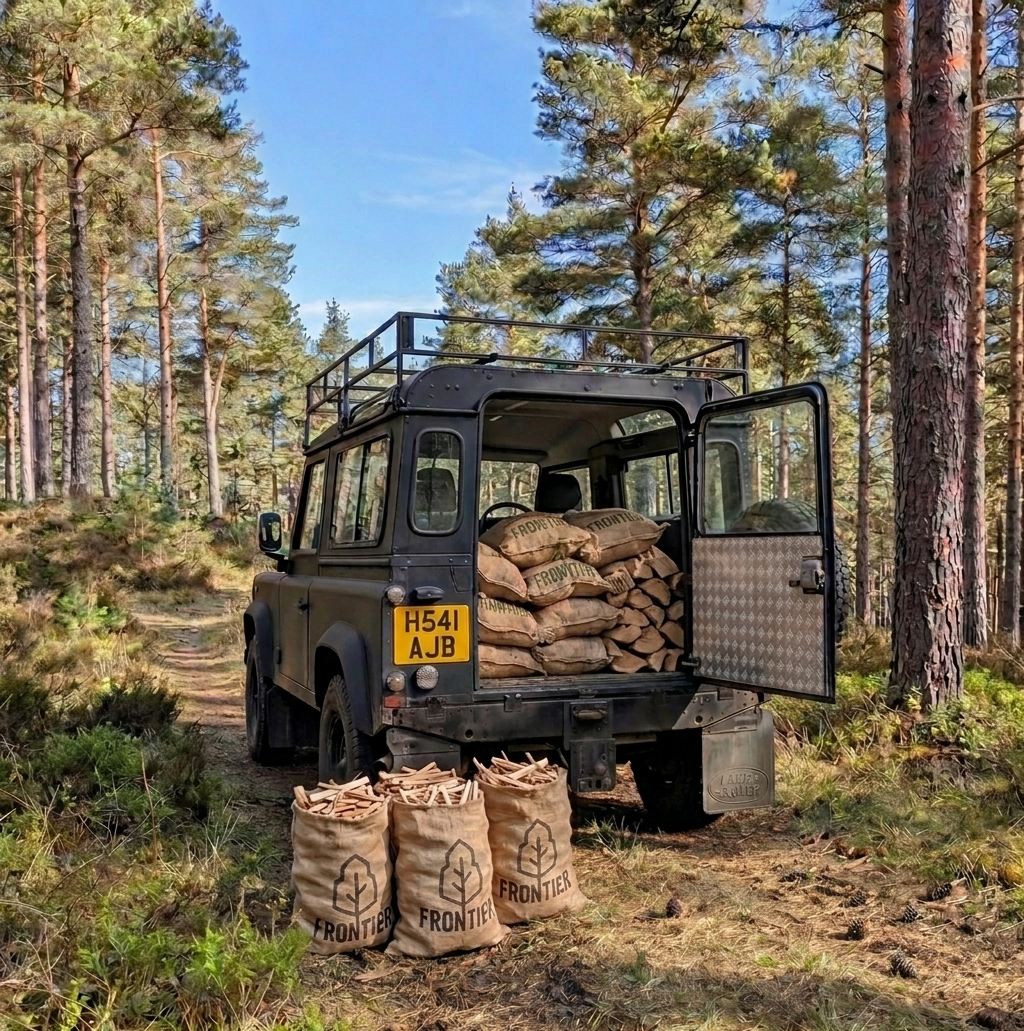
Highland homes are designed around fireplaces for historic and practical reasons. Firewood remains an essential fuel in the Scottish Highlands because of this.
Frontier has set out to give local communities an eco-friendly local choice over supermarket supply chains. A new and sustainable system is born. The Frontier Forestry system serves local communities directly, and creates year-round local jobs. It reduces the carbon cost of this essential fuel. The supply chain is mathematically re-modelled to deliver big savings. Distribution is akin to historic milkrounds. Frontier’s pioneering new model provides an elegant solution to the needs of Scottish Highlanders.
A new line of direct-to-consumer kindling launches in 2026, serving local customers with locally grown and affordable forest produce. It passes on significant carbon and cash savings through modular process innovations and by minimising handling. Read more here.
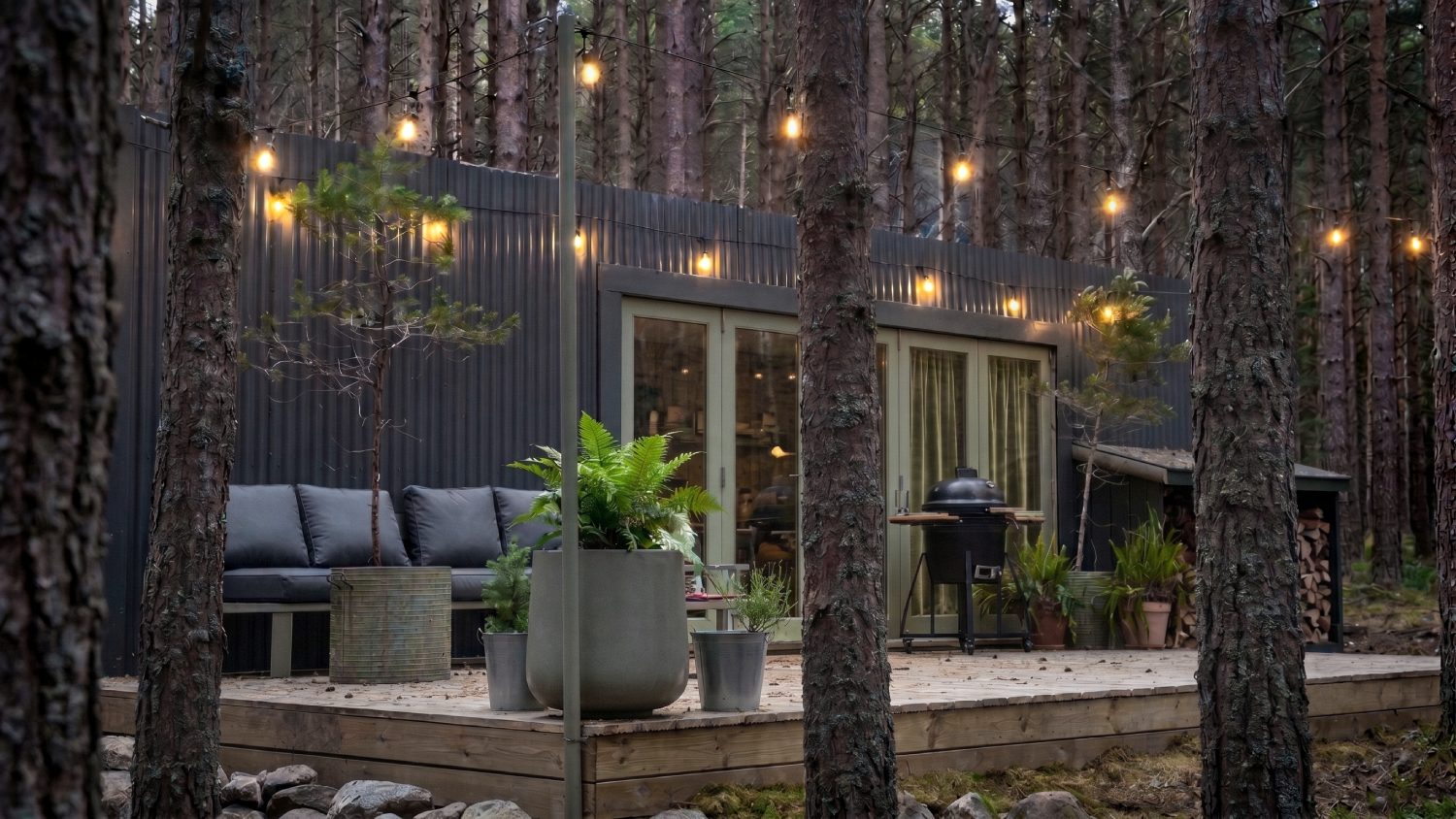
Ambitious forestry diversification goals in remote locations require us to think differently. Major obstacles are blocking forestry from becoming sustainable and diverse; chief among them are mindset, economics and geography. But these obstacles can be overcome.
Rebalancing a plantation in a remote area is not easy, not quick, nor economic (in the standard model). It is impractical (if not impossible) without on-site amenities for these operations. Frontier is overcoming practical and economic obstacles in the Scottish highlands having investing in this multi-purpose portable kit. The benefits are measurable. It benefits from multi-purpose design features that serve our ambitious sustainability goals. Its use significantly reduces costs, enables on-site productivity, and closes economic gaps.
It serves Frontier as an off-grid forestry HQ, and serves as an ecological visitor amenity too. Both create sustainable jobs and generate income for reinvestment. This is a circular economic forestry kit that provides high-quality amenity, designed to enable sustainable forestry operations anywhere. As mission-critical amenity, it enables productivity uplift; forestry activity that is economically and practically un-viable without. Frontier is also investing visitors’ income back into positive ecological projects and enterprise growth; all of which contribute directly to the local economy and policy objectives of forestry nationally. It makes forestry much more resilient, and shows foresters can respond positively to solve the crises.
Solutions are there to be discovered. The surrounding plantation was in an economic and ecological deadlock, boxed in by decisions made 50 years ago. This investment in innovation enables positive stewardship of the plantation, returning a deadlocked site to year-round productive use, and ecological transformation. It is a clear-cut example of how innovation can deliver several national forestry objectives, all in one go.
Like agriculture, foresters must embrace the principles of enterprise. Forestry can be more sustainable and can be more productive and can serve local communities much better, simply by letting go of ideologies on ‘how’.
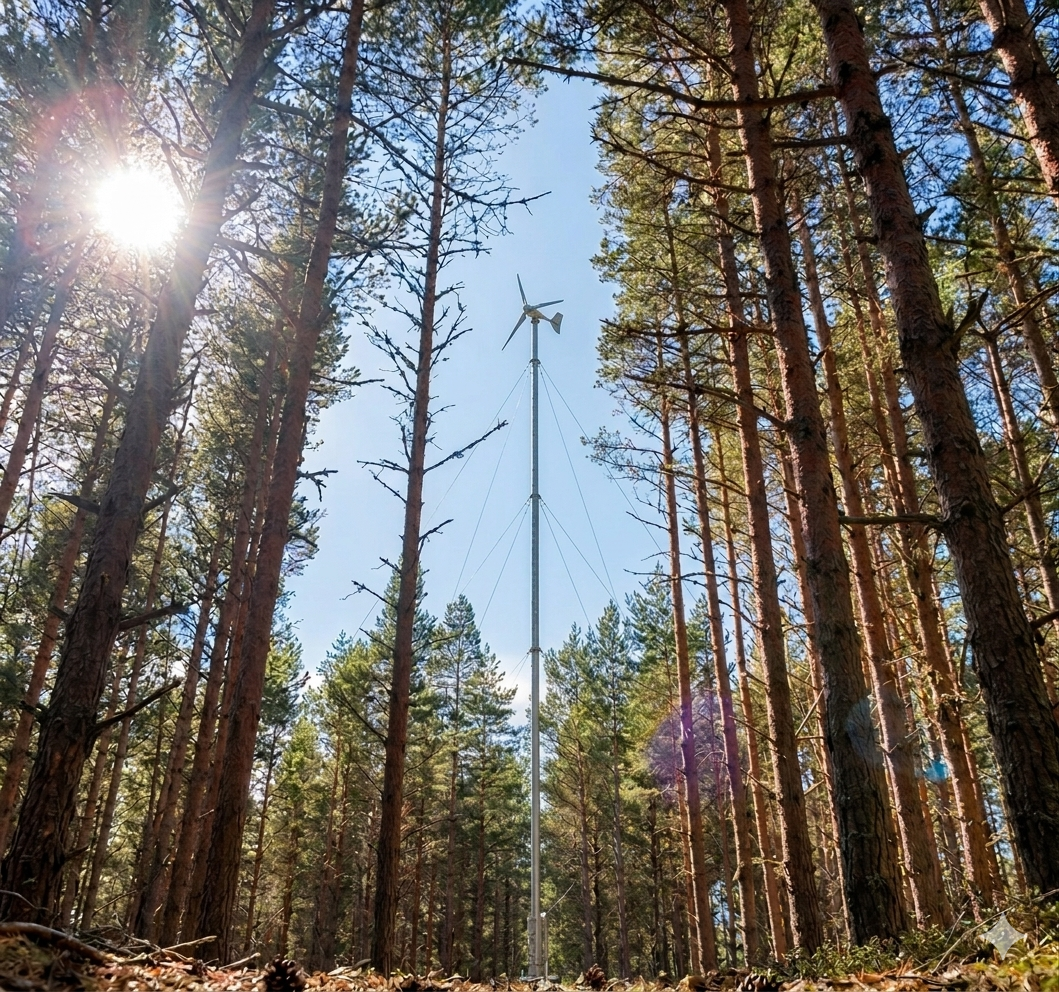
Micro-scale clean energy is quietly harvested on-site through this wind turbine and pop-up modular mast assembly. This innovative lightweight equipment leaves no trace. It can easily be removed and provides green power for tools and forestry equipment when set up like this. It is practically invisible between the trees and can capture up to 2KW/h from the wind above the tree line.
Frontier is demonstrating how forestry can responsibly innovate by embracing the energy transition, without compromising productivity. This R&D project has gone through many iterations to discover how best to set up a lightweight wind energy harvesting rig, with zero lasting impacts. It has delivered extraordinary results and enables on-site diversification projects that all require electricity; now made energy-viable, without requiring any fossil fuels.
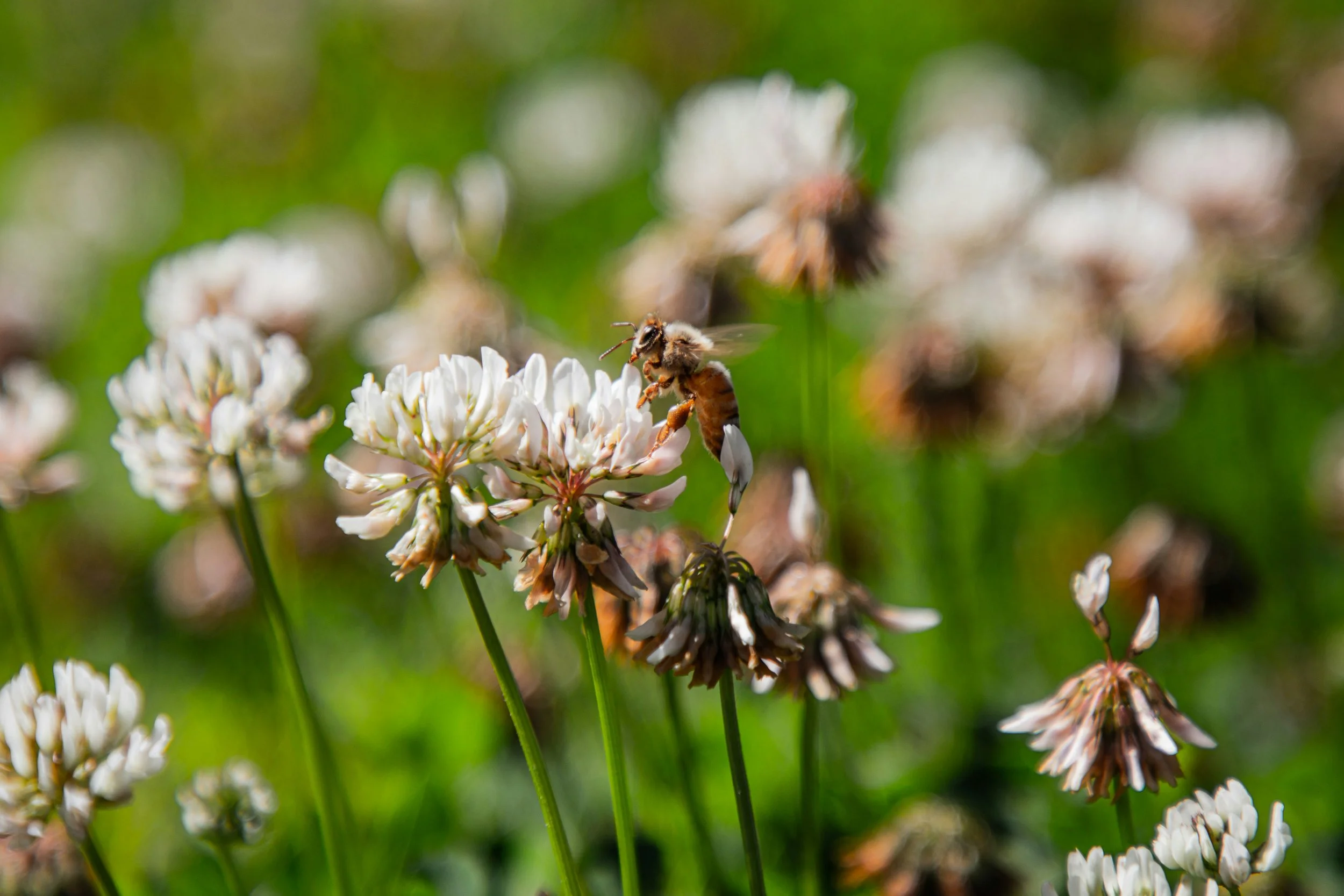
Seeding native wildflowers has introduced a healthier balance of flora in the forest and provides important new food sources for insects and pollinators. The monocrop stand is being tinned to allow dozens of new varieties of species to thrive on land that is otherwise ecologically simplified.
This is a particularly rewarding intervention at Dalbuaik for the bees. Birds and bats are, each in turn, able to feed on a more diverse insect diet. We have invested in progressively seeding native varieties, seeking to produce healthier, more balanced forest ecology for future generations, and value-engineer this to be economical on larger scales.
Beekeeping enables the production of organic honey as a natural forest product. Frontier is developing a collaborative training model of forest beekeepers to enable a new generation to learn these skills and have healthy outdoor experiences while earning at the same time.
2025
Dalbuaik Plantation, Scottish Highlands
“Nature does not believe in waste, and neither do we.”
Frontier 'Waste to Value' ExperimentBusiness Model Experiments
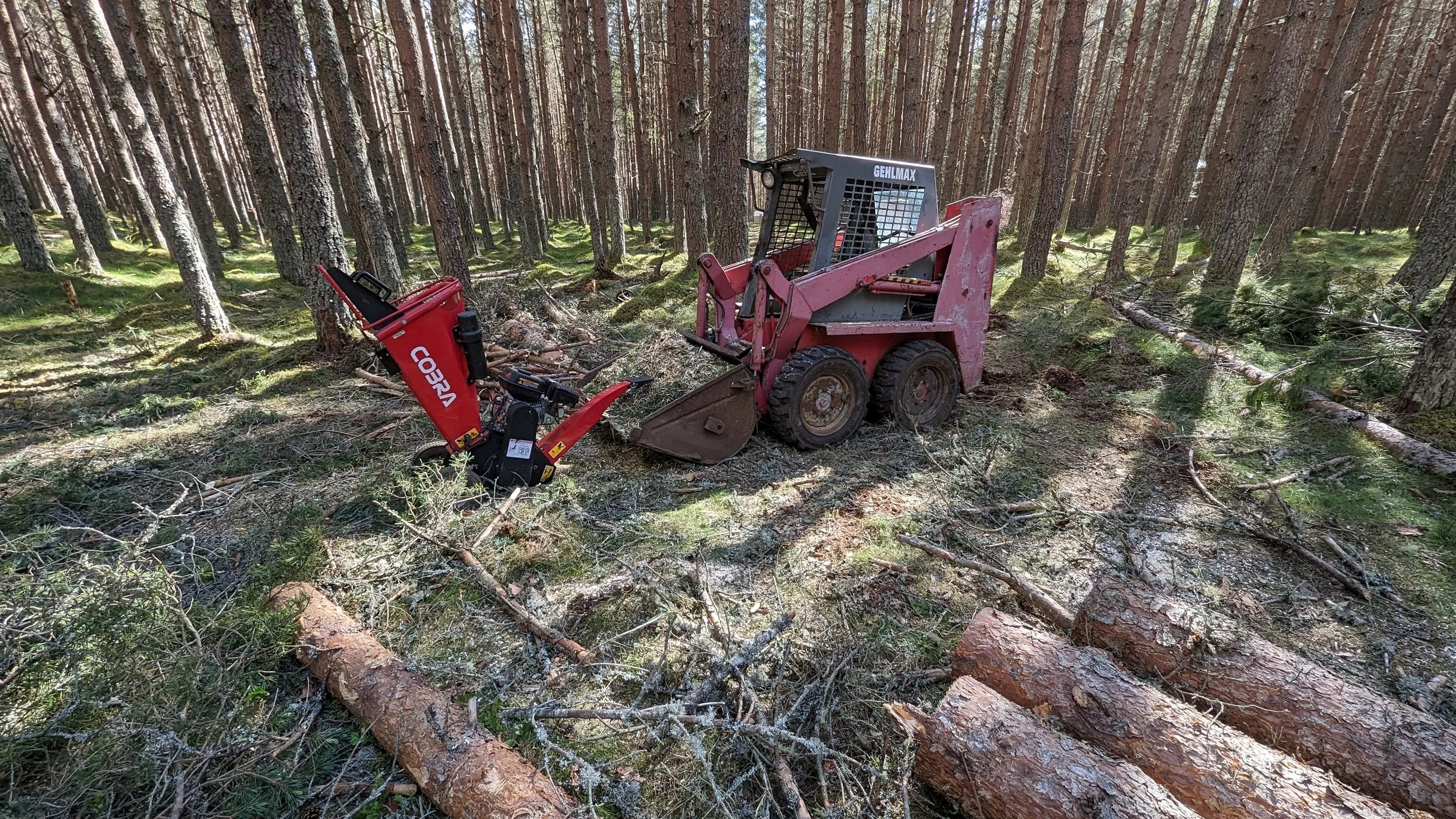
Operations to thin this overgrown Scots pine plantation leave an open question over what to do with ‘low value’ off-cuts. We saw this as an opportunity to study how ‘waste’ can be transformed into valuable produce by value engineering and experimenting with production methodologies.
Even at a modest scale, these experiments proved invaluable. Production variables were measured and modelled for larger-scale operations, demonstrating real returns when done efficiently. The purpose of experiments like this is to unlock the full potential and create new jobs.
2023-2026
Dalbuaik Plantation, Scottish Highlands
Rewilding A Monocrop Plantation
Diversification Economics Evaluated via 'Value Enginerring' ExperimentsDiversification Plan 2023-2028
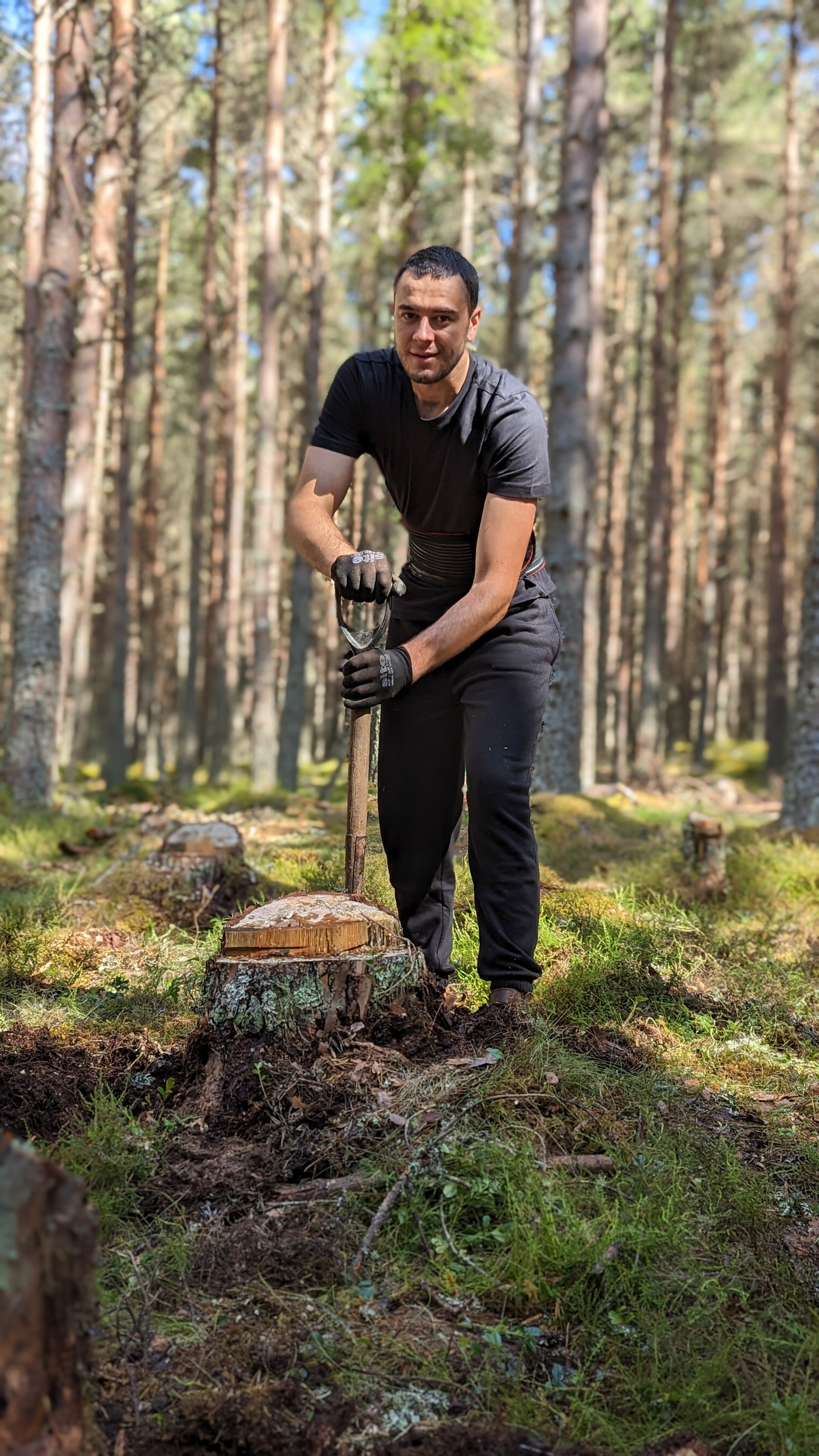
Operations to improve the ecological balance of this plantation are supported by Scottish Forestry. The purpose is to model better forest management through repeatable R&D experiments. This is an opportunity to prove how a monocrop plantation can be made much more habitable for a wider variety of insects, birds, mammals and pollinators, through simple interventions, without making the economics of commercial forestry break. We believe forestry can actually be more productive through diversification, not despite it.
Forestry site managers can create new value through enterprise and innovation. On this one site alone, 5 wildlife interventions are now being modelled and monitored, each increasing biodiversity. How it works on this smaller scale really matters; lessons can be carried forward into larger forestry investments and become Frontier best practice.
A simple example of a positive intervention is the creation of this clearing, opening up the canopy for light to reach emerging flora at ground level that can only thrive with more light. Frontier has then added new wildlife shelters for insects, birds, and mammals. Encouraging new undergrowth alone develops biodiversity through natural succession.
Positive interventions like this can measurably improve the ecological diversity within just 2 seasons.
Get In Touch
If you're interested in working with us, complete the form with a few details about your project. We'll review your message and get back to you within 48 hours.