
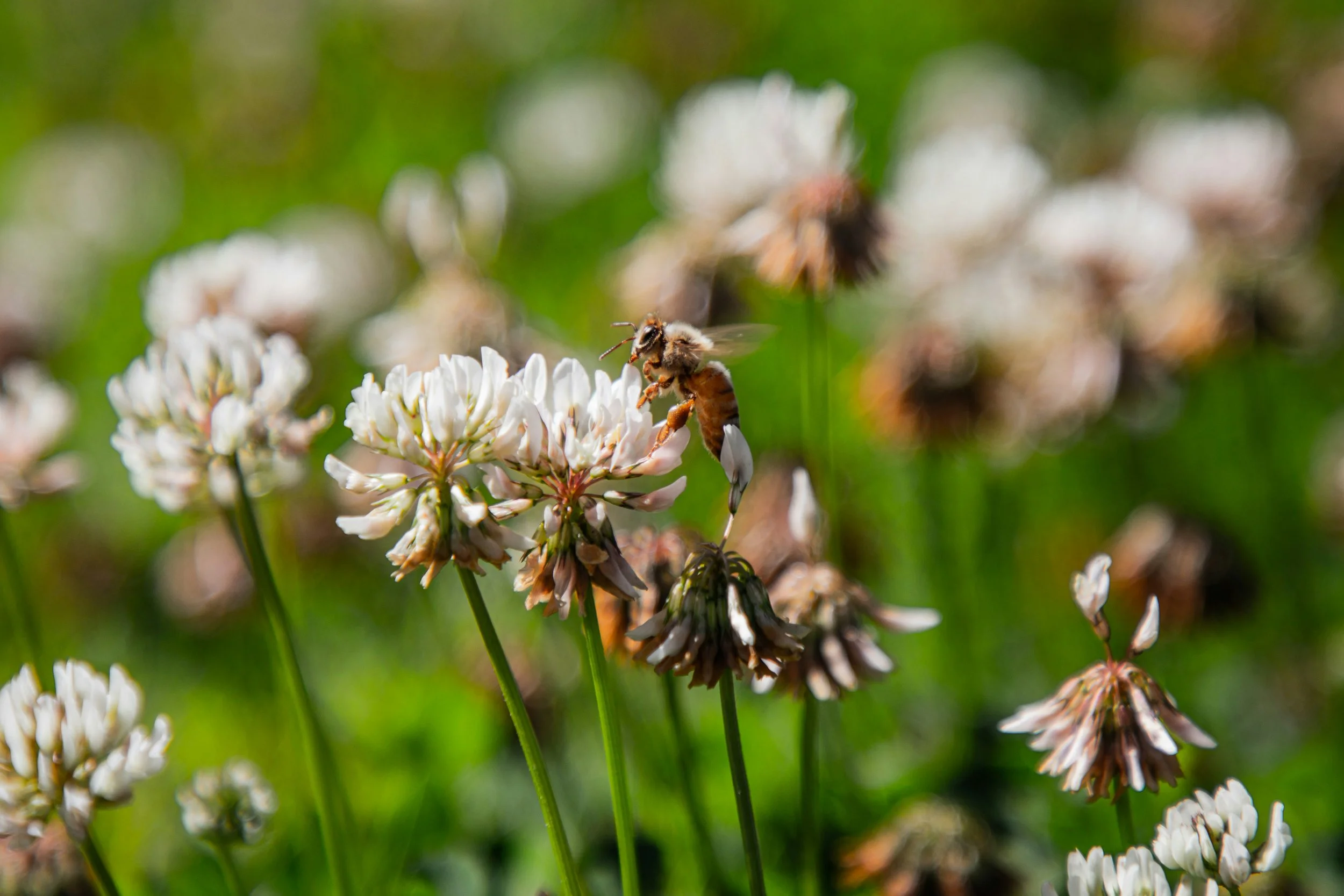
Seeding native wildflowers has introduced a healthier balance of flora in the forest and provides important new food sources for insects and pollinators. The monocrop stand is being tinned to allow dozens of new varieties of species to thrive on land that is otherwise ecologically simplified.
This is a particularly rewarding intervention at Dalbuaik for the bees. Birds and bats are, each in turn, able to feed on a more diverse insect diet. We have invested in progressively seeding native varieties, seeking to produce healthier, more balanced forest ecology for future generations, and value-engineer this to be economical on larger scales.
Beekeeping enables the production of organic honey as a natural forest product. Frontier is developing a collaborative training model of forest beekeepers to enable a new generation to learn these skills and have healthy outdoor experiences while earning at the same time.
Seeding native wildflowers has introduced a healthier balance of flora in the forest and provides important new food sources for insects and pollinators. The monocrop stand is being tinned to allow dozens of new varieties of species to thrive on land that is otherwise ecologically simplified.
This is a particularly rewarding intervention at Dalbuaik for the bees. Birds and bats are, each in turn, able to feed on a more diverse insect diet. We have invested in progressively seeding native varieties, seeking to produce healthier, more balanced forest ecology for future generations, and value-engineer this to be economical on larger scales.
Beekeeping enables the production of organic honey as a natural forest product. Frontier is developing a collaborative training model of forest beekeepers to enable a new generation to learn these skills and have healthy outdoor experiences while earning at the same time.