
Redefining Success: Why Forestry MUST Adapt
The post-war industrial tree-farming model was sold as rational progress.
In reality, it was a simplistic, unbalanced, winner‑takes‑all concept that cleared the way for one thing alone: volume. It is extractive. It is brutal. And, judged by what we know now, it was definitely careless.
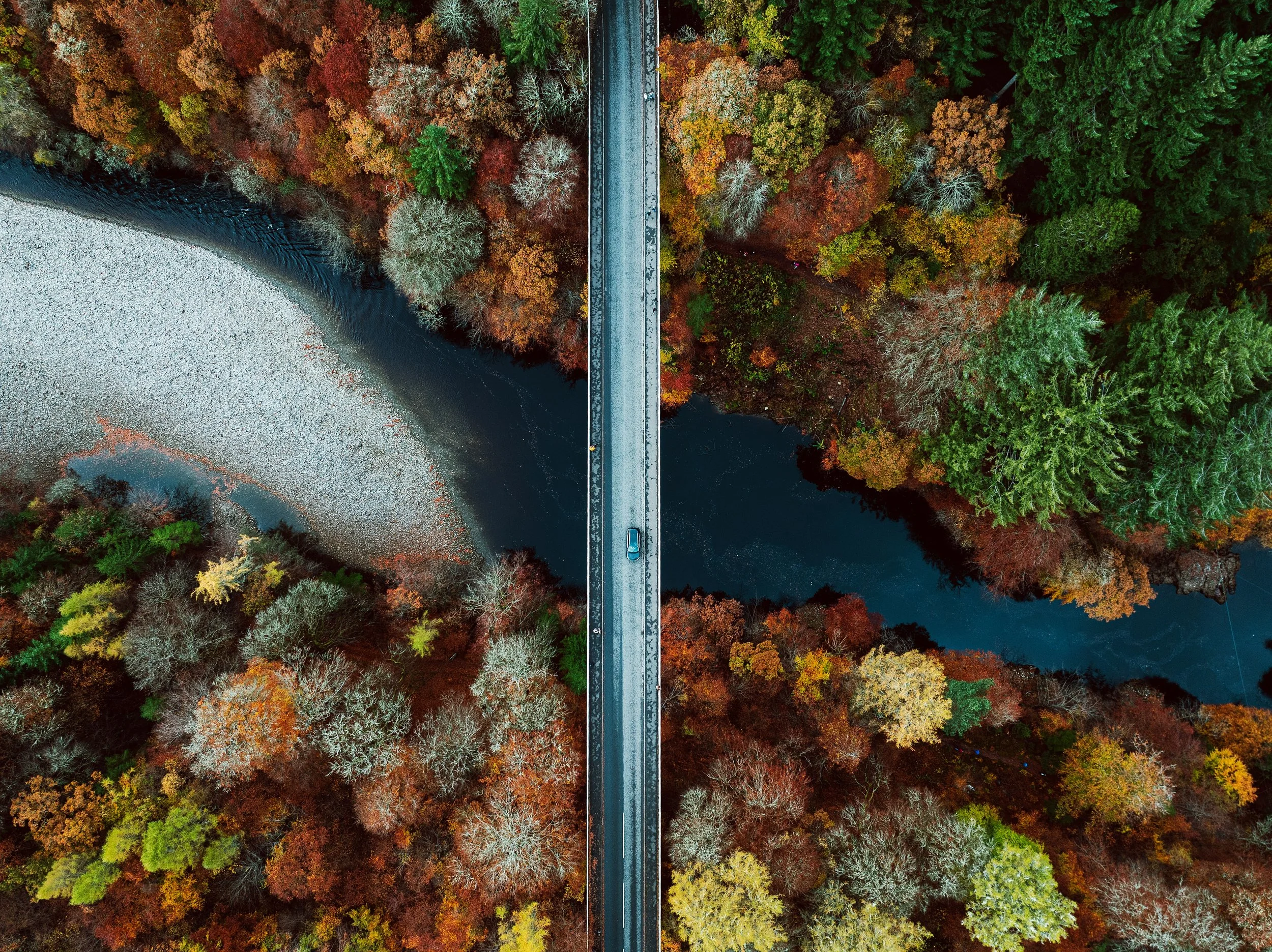
The Future of Forestry Matters: We Are All Stakeholders
The logic was seductively simple. Pick a fast-growing species. Plant it in dense ranks. Streamline management. Mechanise the harvest. Ship the fibre, count the profits, repeat. Complexity was treated as a problem to be solved away: mixed species, rough ground, awkward habitats, small local processors, community use – all of these were seen as inefficiencies in a neat industrial system. For a few decades, this looked like success. Timber production rose, unit costs fell and monocrop plantations became the visual shorthand for “modern” forestry. Success? Biodiversity disagreed.
Forests are not factories. They are living ecosystems embedded in landscapes, communities and climate. When forestry is reduced to fibre, the system is quietly loaded with risk. Single-species stands tuned for maximum short-term output also concentrate vulnerability: to pests, to disease, to windthrow, to drought, to fire and to market shocks. They simplify habitat, squeeze out biodiversity, homogenise rural economies and store up liabilities that only become visible when conditions change.
Those conditions have now changed decisively. Climate volatility is intensifying, ecological baselines are shifting and public expectations about how land should be used are rising. The old model – grow as much uniform timber as possible, as quickly as possible, in as few hands as possible – is no longer just crude. It is dangerous. It locks capital and landscapes into a narrow bet on past assumptions when we need systems that can survive futures no one can fully predict.
Here lies the trap. Despite the failures of the post-war model, we need more timber and more natural materials than ever before. By yesterday.
If we are serious about replacing carbon‑intensive steel, concrete and plastics, the demand for wood will rise, not fall.
Land has competing claims. Forests require patient investment, skilled management and social licence. Timber supply chains have to withstand global shocks, not crumble at the first sign of stress.
Trees do not “just grow on land” any more than money “just grows on trees”.
So the crisis can only be resolved if we do two hard things at once.
First, we must genuinely improve the productivity of land: in ways that reflect biological reality instead of ignoring it.
Second, we must fundamentally prove that the economics of forestry can be improved without treating biodiversity with contempt.
That means moving beyond token gestures – a wildlife strip here, a photo‑ready glade there – and building diversity, structure and ecological function into the business model itself.
This is not about romanticising wilderness or rejecting production. It is about designing forests as long‑term living infrastructure rather than as short‑term fibre mines. Mixed species stands, richer age structures, better soil and water management, more thoughtful edge design, integrated habitat networks and closer links between local processing and local landscapes are not optional extras. They are part of how we keep forests productive under pressure. Diversity is not a luxury; it is an insurance policy.
Economically, this means asking harder questions. Where does value really leak out of current forestry systems? How much is lost through storm damage, disease, fire, premature clear‑fell, stranded assets, degraded reputation, planning conflict and community opposition? How much potential value is ignored because the models used to appraise forests are blind to public benefit, ecological resilience and alternative revenue streams? Improving forestry economics is not just about shaving costs. It is about capturing value that a simplistic model never even bothered to see.
Innovators in the sector are already exploring what a more intelligent approach can look like.
Some are experimenting with diversified stands that blend commercial species with climate‑resilient companions.
Others are rethinking rotation lengths, thinning regimes and canopy structures to keep forests continuously productive while reducing ecological shock.
New circular models are finding ways to cascade wood through multiple uses – from long‑lived products to secondary and tertiary applications – before energy recovery is even considered. These are not abstract theories; they are practical attempts to rewire the incentives that made monoculture seem inevitable.
Independent experts are increasingly clear on the same point: our forestry systems must adapt, and they must do so quickly.
The scientific literature is full of warnings about the vulnerability of monocultures and the benefits of well‑designed diversity. Policy frameworks now speak of “the right tree in the right place for the right purpose” rather than simply “more trees”. Insurers, investors and communities are all beginning to price in the risks of business‑as‑usual, even when some parts of the industry remain reluctant to change.
The uncomfortable truth is that time is short. Forests respond on decadal scales, not quarterly ones.
Every rotation planted today locks in a set of assumptions about climate, pests, markets and public expectations for the next 30, 50 or 80 years. If we repeat the post‑war industrial model now – if we lay down new waves of fragile monocrop estates simply because that is what the spreadsheets are set up to handle – we will be gifting future generations a brittle system just when they need resilience most.
This is why the language of “never again” matters.
Saying that the old model must not be repeated is not an attack on the people who worked within it with the tools they had. It is a recognition that context has moved on and responsibility has deepened.
We know more about ecology. We are living through the new reality of more climate extremes. We have seen how communities respond when landscapes are treated purely as extraction zones. With that knowledge, continuing as before is not neutrality. It is negligence.
The task ahead is demanding but achievable. It requires investors willing to back more sophisticated models, regulators willing to align incentives with long‑term public value, and operators willing to experiment, learn and share what works. It also requires a more honest public conversation about trade‑offs: which landscapes should prioritise production, which should prioritise restoration, and how we can make both work together instead of in opposition.
If we get this right, forests can play a central role in a more resilient, low‑carbon, material future – providing timber, carbon storage, habitat, flood protection, rural livelihoods and cultural value in a single, integrated system. If we get it wrong, we will repeat the worst features of the past just as the margins for error collapse.
The post‑war model was built for a different world. In this one, simplicity is no longer an asset. Complexity is not a nuisance to be engineered away; it is the fabric of living systems and the source of their strength.
Independent experts and serious forestry innovators increasingly agree on the essential point: we must urgently improve the sector, rethink its economics and act at landscape scale now, before it is too late to steer a different course.
